
The Complete Bassinet Guide for First-Time Mums: Everything You Need to Know Before Baby Arrives

You've built the registry. You've watched every YouTube video. You've compared five different brands at 2am while your partner was fast asleep. And yet — you're still not 100% sure which bassinet is right for your baby.
Sound familiar?
You're not alone. Choosing a bassinet is one of those decisions that feels deceptively simple ("it's just a place for the baby to sleep!") until you start researching and realise there are approximately 47 different types, each with passionate advocates on every parenting forum.
This guide cuts through the noise. We've pulled together everything you actually need to know — from bassinet safety standards to the best bassinet for your specific situation — so you can feel genuinely confident in your choice, not just temporarily reassured until the next TikTok sends you spiralling again.
Why Your Bassinet Choice Actually Matters
Before we get into the types, let's talk about why this decision is worth your careful attention.
Safe sleep is the number one priority in those early months. Red Nose Australia recommends that babies sleep on their back, on a firm and flat surface, in their own safe sleep space — for every sleep, day and night, for the first six to twelve months. Your bassinet is that safe sleep space for a significant portion of your newborn's life.
But beyond safety, the right bassinet can genuinely change your first few months. A well-chosen bassinet means less sleep disruption for you, easier night feeds, and a baby who settles more consistently. The wrong one means awkward transfers, a sore back from bending over the wrong height, or a baby who won't sleep anywhere but your arms.
So yes — this choice matters. Let's help you make it well.

The Main Types of Bassinet Explained
1. Bedside Bassinet
A bedside bassinet (sometimes called a co-sleeper bassinet or sidecar bassinet) attaches to or sits flush against your bed, with one side that folds down or removes entirely. This gives you the closeness of co-sleeping without the safety risks of sharing a sleep surface.
Why first-time mums love it:
- Dramatically easier night feeds — you can reach your baby without getting out of bed
- Ideal for caesarean recovery when mobility is limited
- Gives you the reassurance of being able to see and hear your baby without having them in your bed
- Most have adjustable heights to match different mattress levels
Best for: Mums who are breastfeeding, anyone recovering from a c-section, or if you're anxious about having baby in a separate room.
What to look for: Adjustable height settings, a firm and breathable mattress, sturdy attachment mechanism, and mesh sides for airflow and visibility.
2. Co-Sleeper Bassinet
Often used interchangeably with "bedside bassinet," a co-sleeper bassinet is specifically designed to sit next to your bed, keeping baby within arm's reach while maintaining their own separate, safe sleep surface.
The key difference from a standard bassinet is proximity — co-sleeper bassinets are designed to sit at mattress height and create a seamless extension of your sleeping space. This is particularly valuable in the fourth trimester when babies often want to be near you constantly.
Important note: A co-sleeper bassinet is not the same as bed-sharing. The baby always sleeps on their own firm, flat mattress — never on an adult mattress or pillow.
3. Portable Bassinet
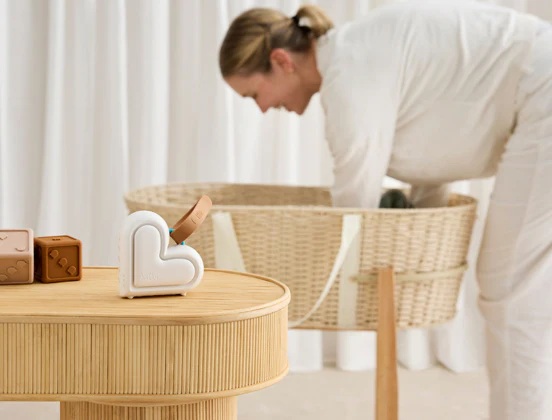
A portable bassinet (also called a travel bassinet) is lightweight, foldable, and designed to move with you. These are typically softer-sided structures that fold flat for storage or travel.
Why first-time mums love it:
- Perfect for moving between rooms during the day (kitchen, lounge, bedroom)
- Essential for visiting grandparents or staying overnight elsewhere
- Often more affordable as a secondary option alongside a more robust main bassinet
- Some double as baby loungers or play spaces
Things to watch: Always check that your portable bassinet meets Australian safety standards (AS/NZS 2195:2022 for portable cots and bassinets). The mattress should be firm, flat, and fit snugly with no gaps at the sides.
4. Travel Bassinet
A travel bassinet is a step beyond portable — these are specifically engineered for regular travel, often with carry bags, airline-approved designs, or compatibility with travel cots and prams.
If you're planning to visit family interstate or overseas in the first year, or if you travel frequently for work, a dedicated travel bassinet is a worthy investment. Look for ones that are IATA-compliant or have been specifically tested for travel use.
5. Smart Bassinet (The SNOO and Similar)
The SNOO bassinet is in a category of its own — and if you've been researching for more than five minutes, you've probably already encountered it.
The SNOO by Happiest Baby is a "smart" responsive bassinet that uses gentle motion and white noise to soothe babies and, according to the brand, extend sleep. It clips your baby safely in using its signature swaddle sack, which prevents rolling.
What makes it different:
- Responds automatically to baby's cries with increasing levels of motion and sound
- The swaddle clip keeps babies on their back (a safe sleep plus)
- Has a substantial body of parent testimonials around improved infant sleep
- Available to rent as well as purchase, which changes the value proposition significantly
The honest truth about the SNOO bassinet: It's expensive — retailing in Australia for over $1,800. Many parents swear by it; others find their baby was unimpressed. If budget is a consideration, renting first is a smart way to trial it before committing.
Baby Central tip: The SNOO is worth considering if you have a baby with reflux, colic, or are particularly anxious about sleep deprivation. For many families, renting for three to four months is more cost-effective than buying.
Bassinet Safety: What Every Australian Mum Needs to Know
Safety is non-negotiable. Here's what to check before you buy any bassinet:
Australian Standards Compliance All bassinets sold in Australia should comply with AS/NZS 2195:2022 (for portable cots and bassinets). Check the product listing or ask your retailer before purchasing.
Firm, Flat Mattress The mattress should be firm enough that it doesn't indent significantly when you press on it. Soft mattresses increase the risk of suffocation. This applies even to travel and portable models.
No Gap at the Sides There should be no gap larger than 25mm between the mattress and the sides of the bassinet. Babies can become trapped in gaps.
Breathable Sides Mesh or slatted sides allow airflow and let you see your baby easily. Avoid bassinets with solid fabric sides that restrict visibility or airflow.
Stable Base Give any bassinet a firm push before you buy. It should not rock, wobble, or tip. If it has wheels, the brakes should lock securely.
No Pillows, Positioners, or Bumpers Your bassinet should contain only: your baby, in their sleep clothing, on a firm mattress with a fitted sheet. Nothing else. Not the gorgeous organic cotton positioner you saw on Instagram. Not the bumpers that came with the set. Just baby, clothes, firm mattress, fitted sheet.
Bassinet Mattress Protector: Don't Skip This Step
Here's one thing that falls off many registry lists until after the first nappy explosion: the bassinet mattress protector.
Bassinet mattresses are typically not washable. One leak and the mattress is compromised — and given that newborns are essentially small leaking machines, this is less "if" and more "when."
A waterproof bassinet mattress protector sits between the mattress and the fitted sheet, protecting the mattress from moisture, mould, and bacteria. You should have at least two (so one can be in the wash while the other is in use).
What to look for in a bassinet mattress protector:
- Waterproof but breathable (not a crinkly plastic feel — look for TPU-backed cotton or bamboo)
- A snug fit with secure corners — it should not bunch or shift under the sheet
- Machine washable and quick drying
- No added fragrance or harsh chemicals
Baby Central recommendation: Buy two mattress protectors before baby arrives, along with at least three bassinet sheets. You will thank yourself at 3am.
Bassinet Sheets: The Detail Most Mums Overlook
While you're thinking about it — bassinet sheets deserve more attention than they typically get on registry checklists.
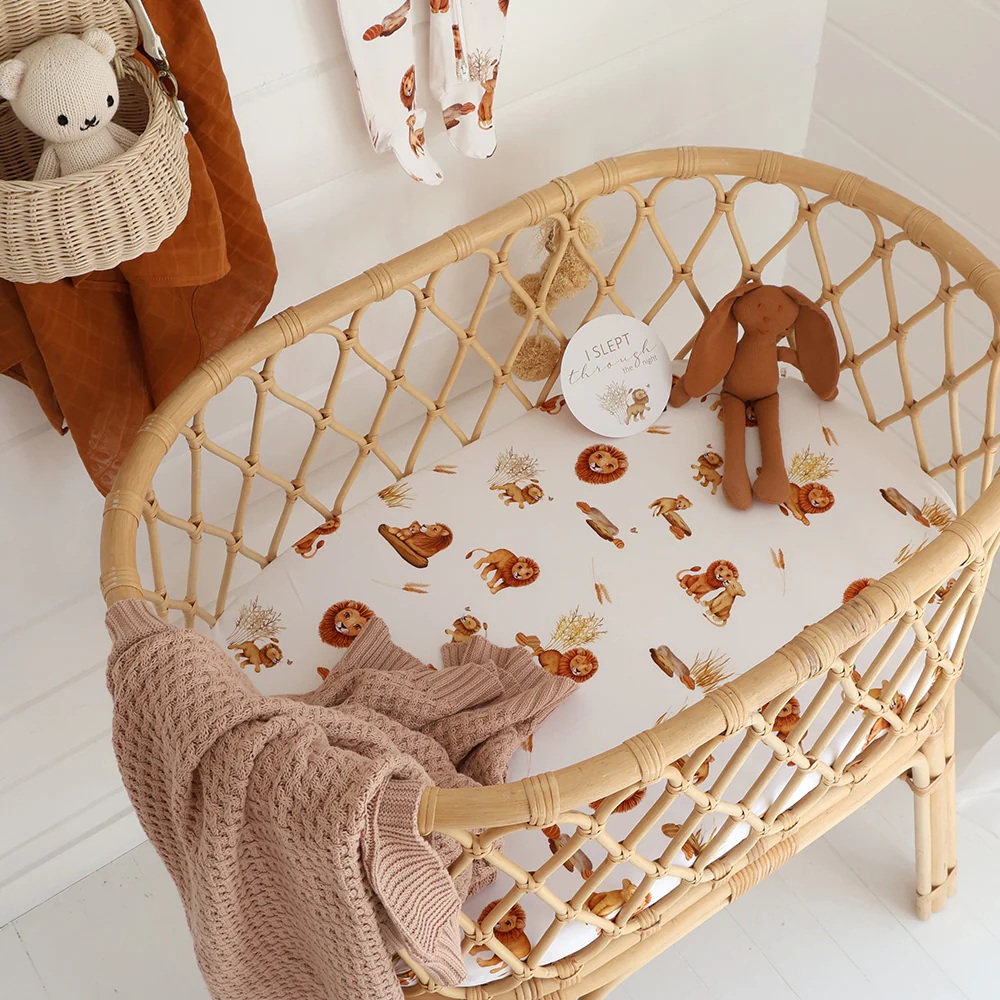
Standard cot sheets do not fit bassinets. Bassinet mattresses are smaller and often oval or rounded at the ends, requiring specifically sized sheets that fit snugly without excess fabric.
Why this matters: Loose sheets are a suffocation hazard. This is not a place to improvise with a regular pillowcase or a sheet that's "close enough."
What you need:
- Sheets specifically sized and shaped for your bassinet model
- At least three fitted sheets (trust us — nappy leaks, spit-up, and condensation mean you'll cycle through them quickly)
- Natural fibres where possible: cotton muslin or bamboo cotton breathe better and feel softer against newborn skin
- Simple, no-frills design — no decorative ties, buttons, or embellishments that could become hazards
Check your bassinet brand's own sheet range first, as these will be cut specifically for your mattress shape and size.
How to Choose the Right Bassinet for You: A Decision Framework
Still feeling overwhelmed? Use these questions to narrow it down:
Question 1: How are you planning to feed? If you're breastfeeding (or hoping to), a bedside or co-sleeper bassinet is worth serious consideration. The ability to feed without fully waking yourself is not a luxury — it's a sanity-saver.
Question 2: What is your recovery situation? Caesarean recovery, pelvic girdle pain, or other physical limitations make a bedside bassinet with drop-side access almost essential. Consider the bending height carefully — your bassinet should sit at a height where you're not straining your back on every transfer.
Question 3: Will you be travelling in the first year? If yes, factor in a portable or travel bassinet, either as your primary option or as a second unit. Having to use a travel cot that you haven't tested is significantly more stressful than having a familiar sleep space you can bring with you.
Question 4: What is your budget? Set a realistic budget before you start comparing. Premium bassinets (including the SNOO) can exceed $1,800. Mid-range quality options sit between $300–$700. Budget options from $100–$300 can meet safety standards perfectly well — the price difference is often in features, aesthetics, and longevity rather than fundamental safety.
Question 5: How long will you use it? Most bassinets have a weight limit of around 9kg, which typically aligns with around four to six months of age — though some babies reach this limit sooner. If you're hoping for a longer run, look for bassinets with higher weight limits or ones that convert to a cot or bedside sleeper for the longer term.
Our Bassinet Recommendations by Situation
Best for breastfeeding mums: A bedside co-sleeper bassinet with adjustable height and drop-side access. Look for breathable mesh sides and a firm, flat mattress.
Best for travel: A lightweight portable bassinet that folds flat and comes with a carry bag. Confirm it meets AS/NZS 2195:2022 before purchase.
Best for anxious first-time mums: The SNOO (consider renting first) or a bedside bassinet with a built-in heart rate or movement monitor.
Best for budget-conscious families: A mid-range freestanding bassinet that meets Australian safety standards, paired with quality bassinet sheets and a bassinet mattress protector. Safety features don't require a premium price.
Best for style-focused nurseries: Many premium brands now offer bassinets with beautiful designs and natural materials. Just make sure aesthetics don't compromise the non-negotiables: firm mattress, snug fit, no gaps.
What to Buy Alongside Your Bassinet: The Complete Sleep Setup Checklist
Once you've chosen your bassinet, here's what you need to complete the safe sleep setup:
- Bassinet mattress protector × 2 (waterproof, breathable)
- Bassinet sheets × 3 minimum (correctly sized fitted sheets)
- Swaddles or sleep bags appropriate for the season (no loose blankets)
- White noise machine (optional but beloved by many families)
- Baby monitor if the bassinet won't be in your room
That's genuinely it. Resist the urge to add positioners, pillows, rolled blankets, or decorative items. A clear, firm sleep space is the safest sleep space.
Frequently Asked Questions
Can my baby sleep in a bassinet from birth? Yes. A bassinet is an ideal sleep space from birth, provided it meets Australian safety standards and has a firm, flat mattress with a well-fitting sheet.
When should I transition from a bassinet to a cot? Most babies transition between four and six months, when they approach the weight or length limit of the bassinet, begin rolling, or show signs of pushing up on their arms. Your bassinet's instruction manual will specify the maximum weight and any developmental milestones that indicate it's time to move on.
Is a co-sleeper bassinet safe? Yes, when used correctly. A co-sleeper bassinet is not the same as bed-sharing. Your baby sleeps on their own firm, separate mattress — never on your mattress, pillow, or duvet. Follow the manufacturer's instructions for attachment and positioning.
Do I need a bassinet AND a cot? Not necessarily. Some families use a bassinet for the first few months and then transition to a cot. Others skip the bassinet entirely and use a cot from birth. The bassinet is most useful if you want baby close during the night-waking phase, or if your cot is in a separate room and you'd prefer your newborn to sleep nearby.
Can I use a second-hand bassinet? Proceed with caution. Always check that a second-hand bassinet meets current Australian standards (older models may not), that no parts are damaged or missing, and always purchase a brand-new mattress — never reuse a second-hand mattress.
The Bottom Line
There is no single "best" bassinet for every family. There is a best bassinet for your family — one that suits your feeding plans, your recovery, your living situation, your budget, and your baby's temperament.
What we can say with confidence: choose a bassinet that meets Australian safety standards, pair it with a firm mattress, a well-fitted bassinet mattress protector, and the right size bassinet sheets — and you've created a genuinely safe, comfortable sleep space for your newborn.
You've done the research. You've asked the right questions. Trust yourself.
Shop the Range at Baby Central
Ready to shop? Explore Baby Central's curated range of bassinets, co-sleeper bassinets, portable bassinets, travel bassinets, SNOO accessories, bassinet sheets, and bassinet mattress protectors — all selected to meet Australian safety standards and the real needs of Australian families.
This article has been written in accordance with Red Nose Australia safe sleep guidelines. For personalised advice, consult your midwife, child health nurse, or paediatrician.
© Baby Central Australia. All rights reserved.